CONTEXT
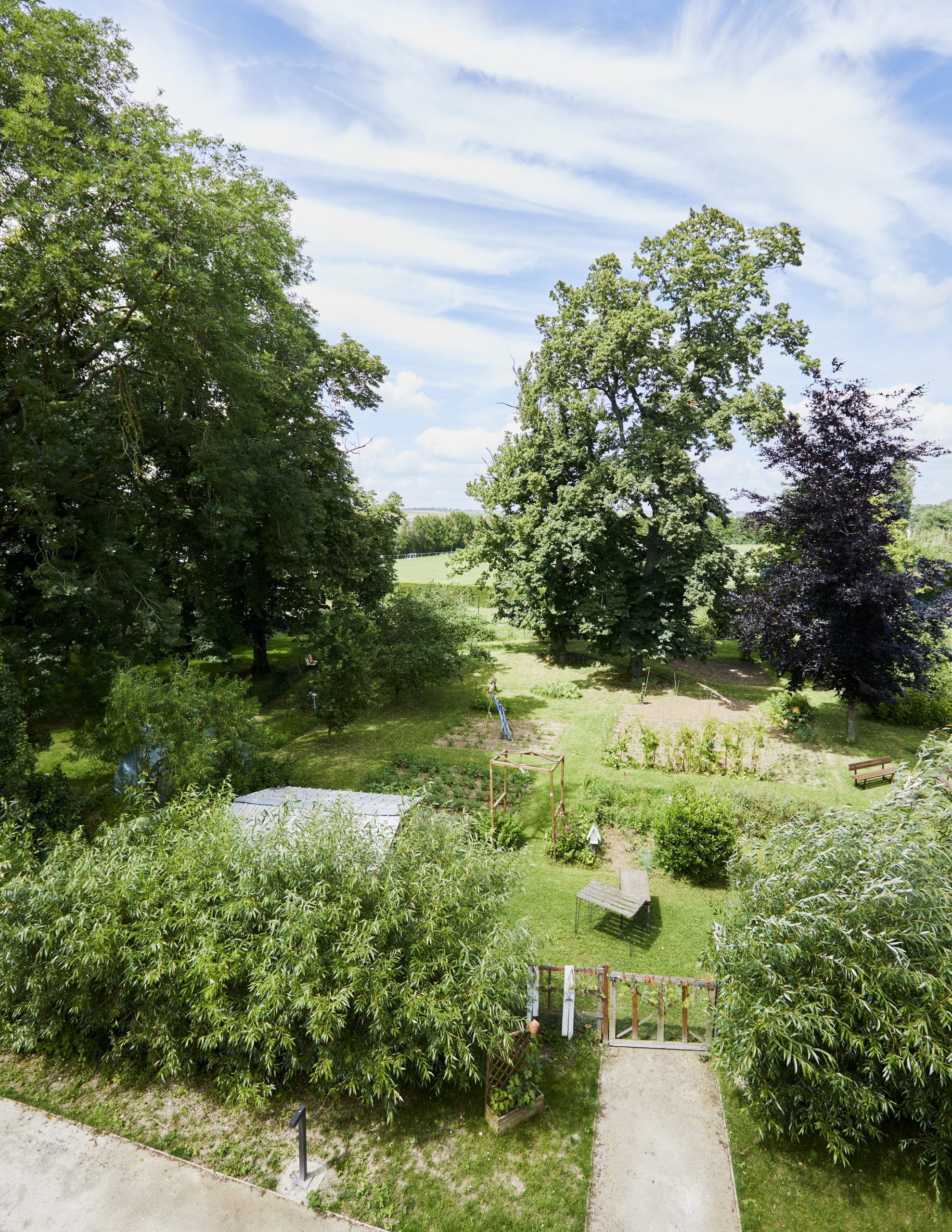
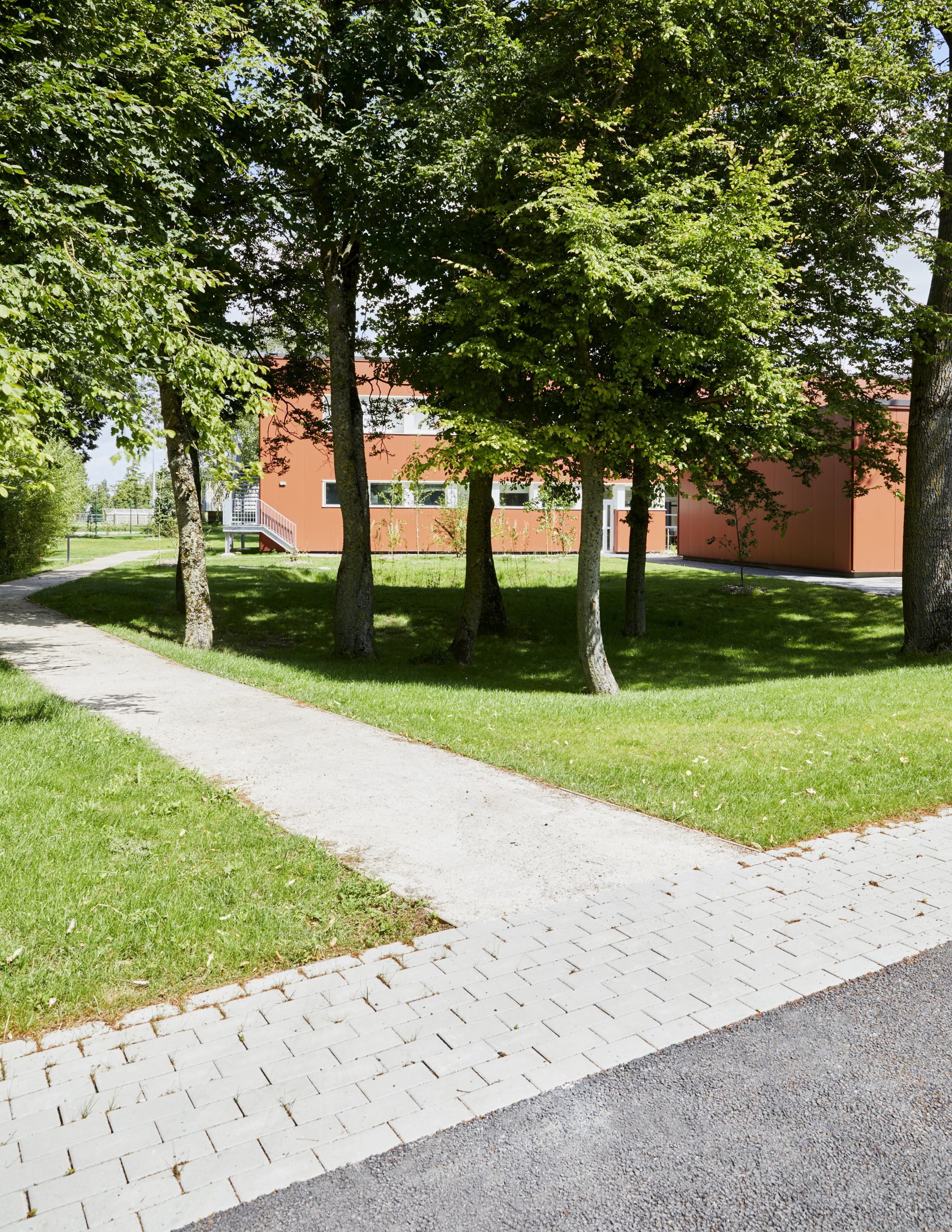
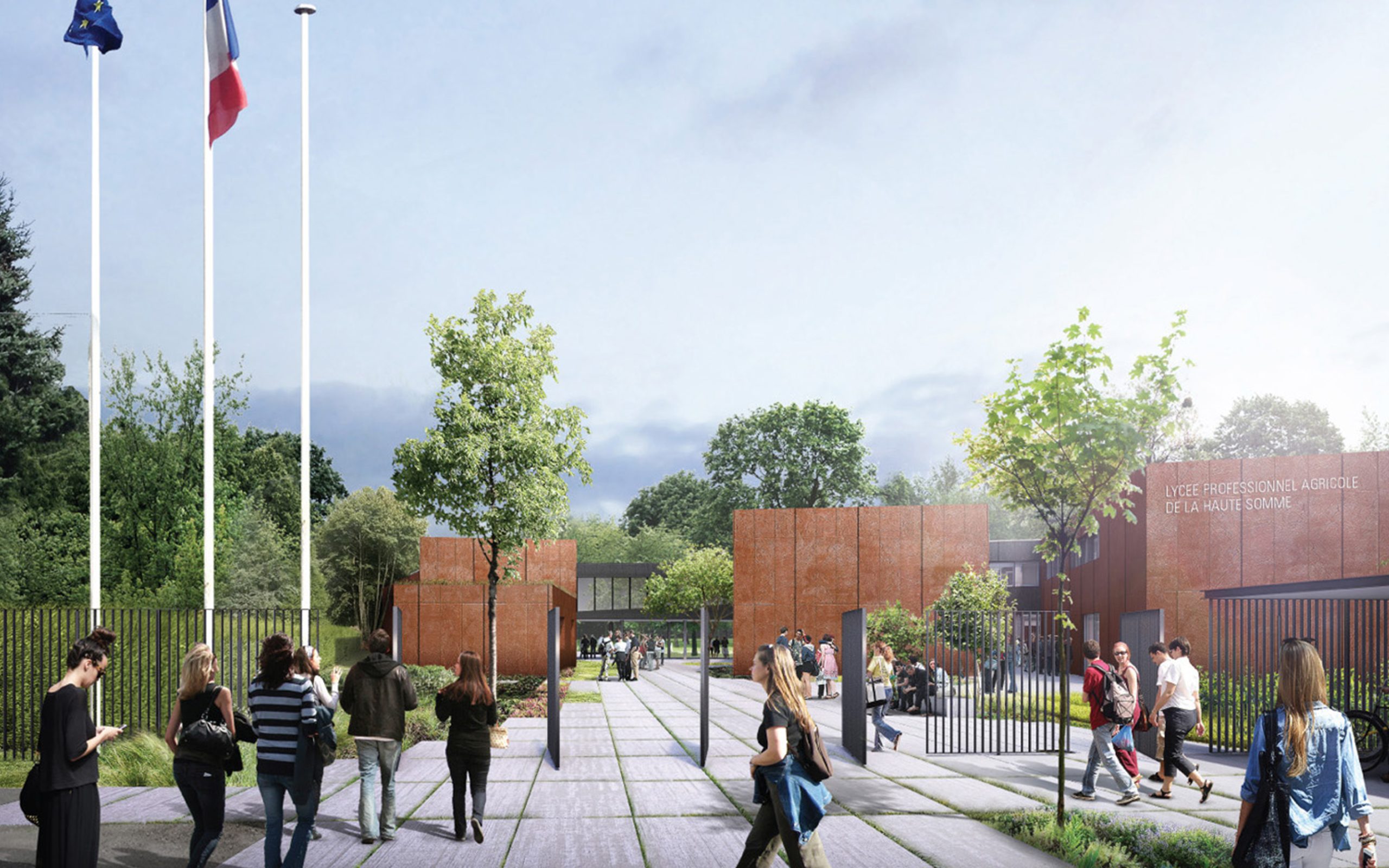
The Péronne Agricultural Vocational High School is located at the far northwest of the commune. The restructuring of the Lycée de Péronne is part of a broader site planning approach, one of the site’s primary qualities being the presence of trees forming a wooded park.
“How can the potential of the site be revealed? How can circulation, sightlines, and points of attraction be reorganized?” It is around this question that our design process began.


THE FORECOURT
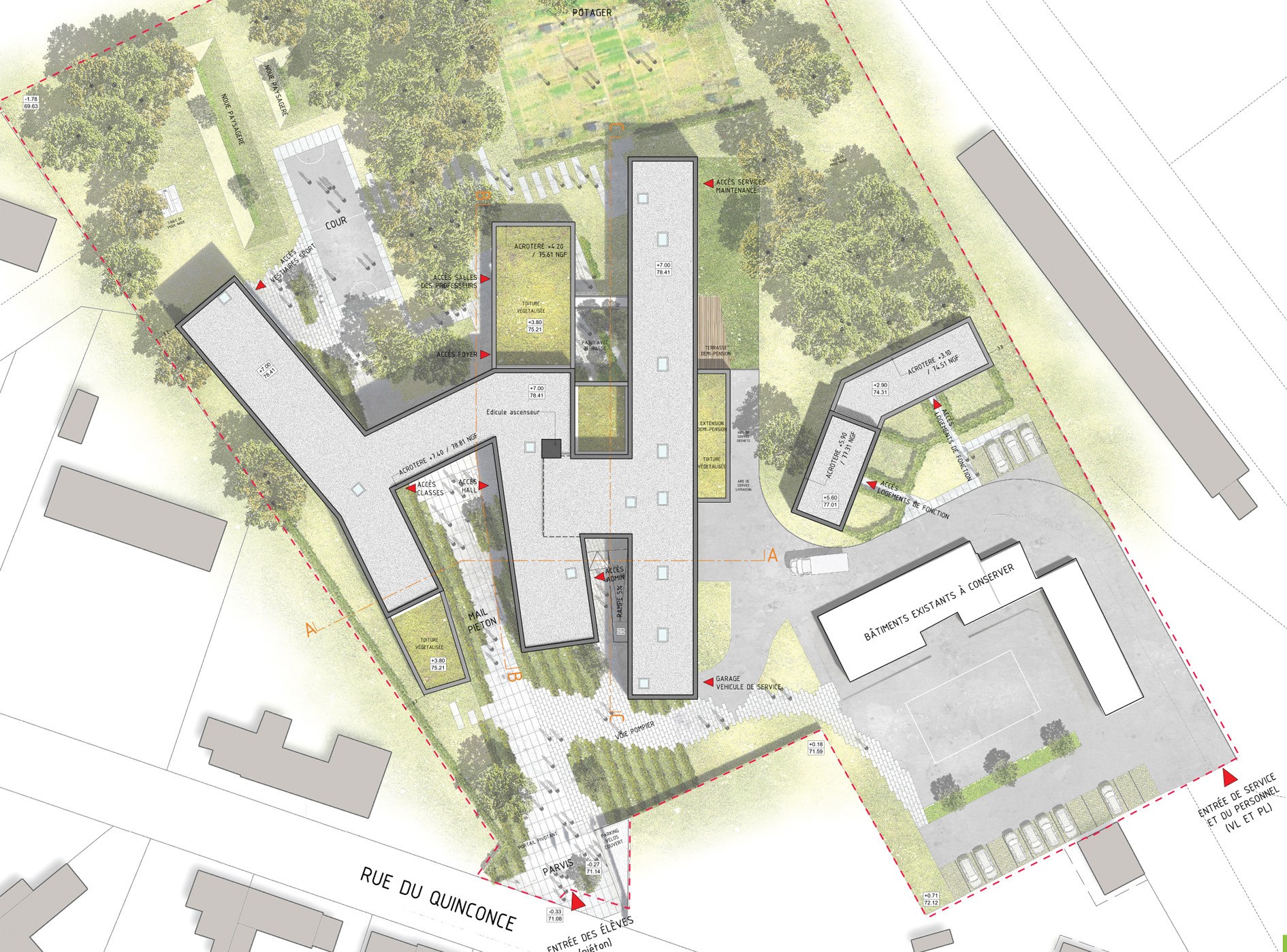
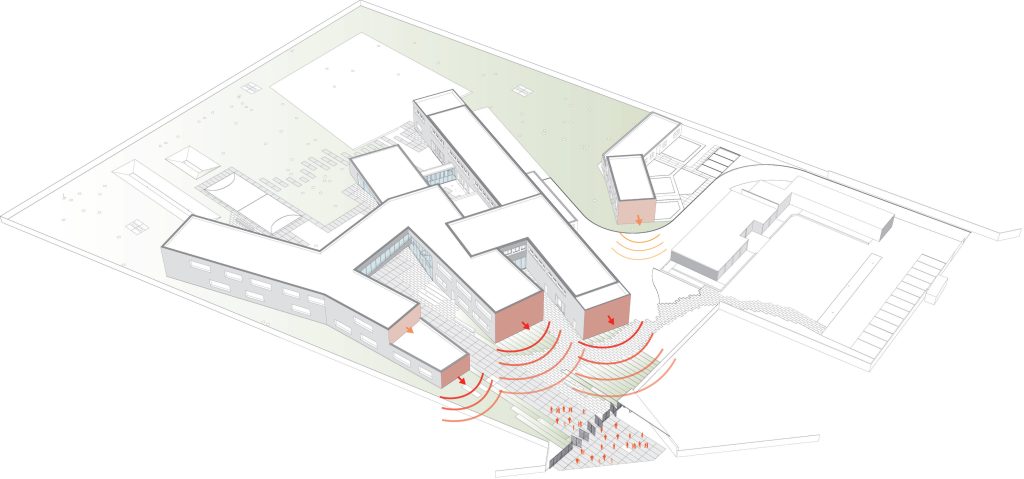
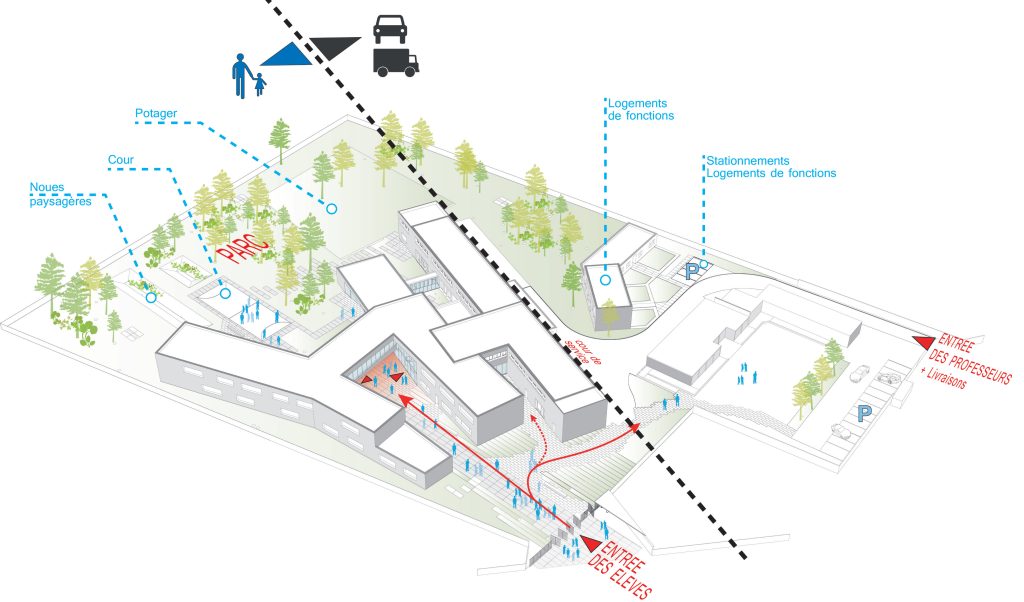
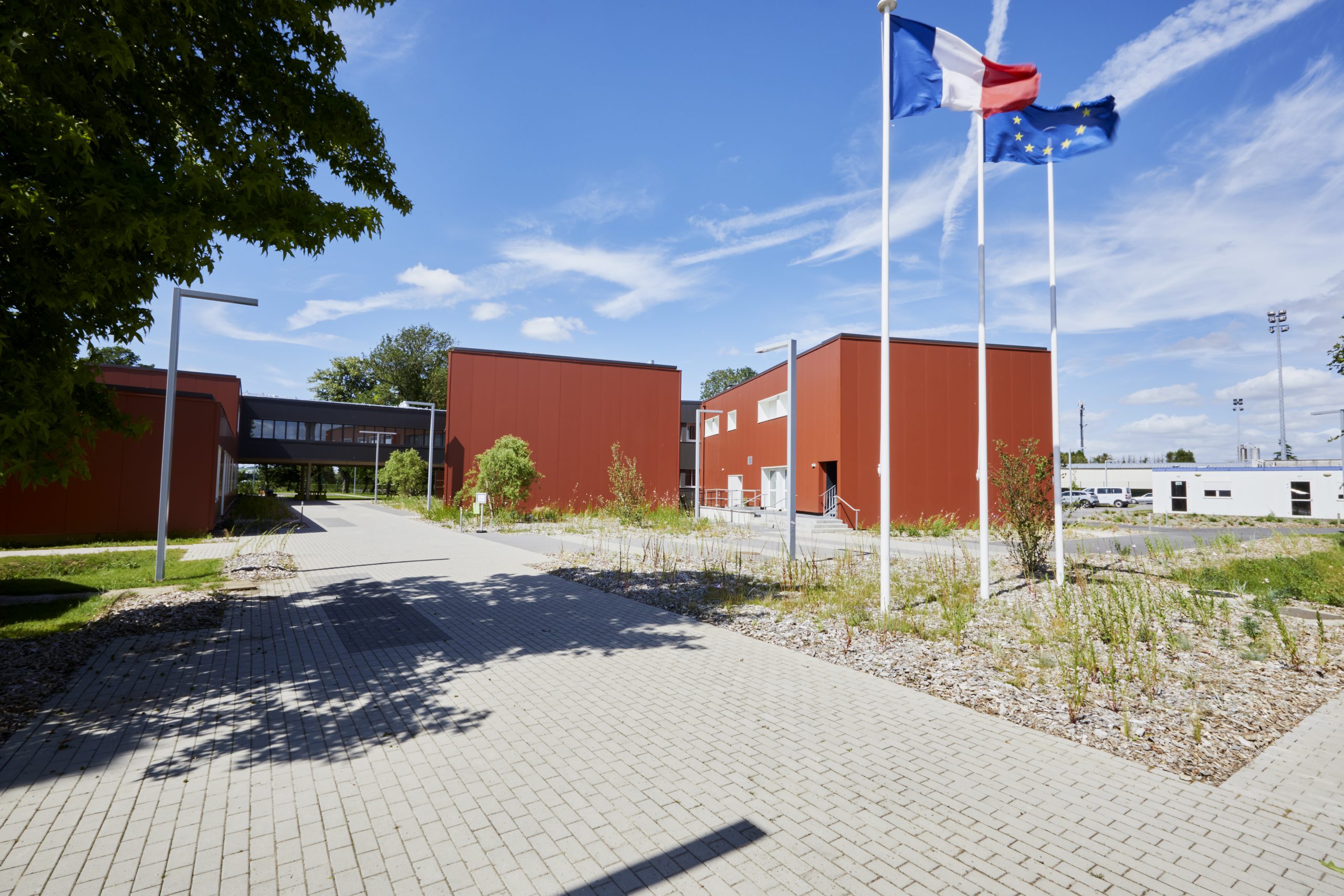
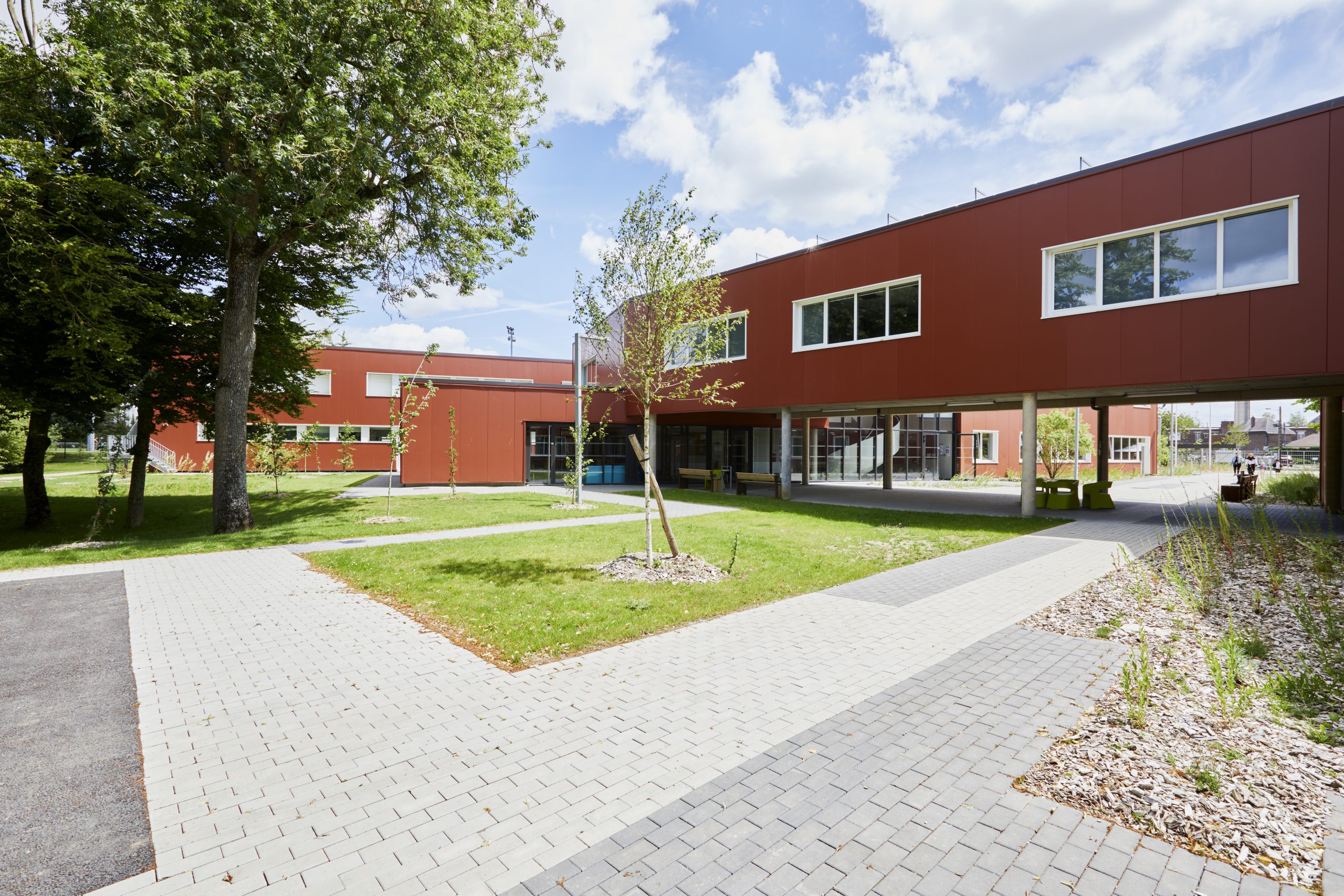
The main entrance provides an ambiance that is both calming—inviting conversation, pause, and exchange—and dynamic in its form and movement. The forecourt is open, facilitating legibility of the space. It highlights the main building and gradually guides users toward the central axis. This area includes a bicycle shelter, furniture, and signage elements to aid orientation on the site.
THE CENTRAL AXIS
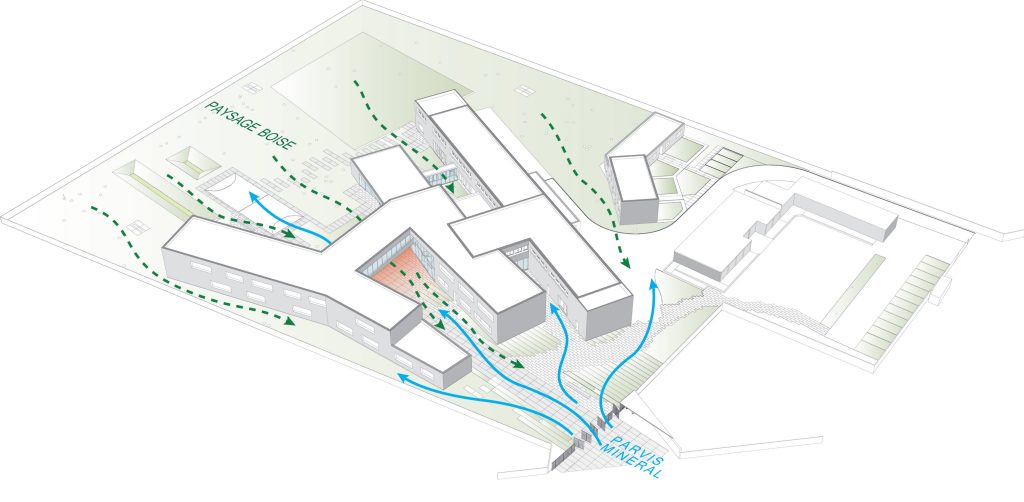
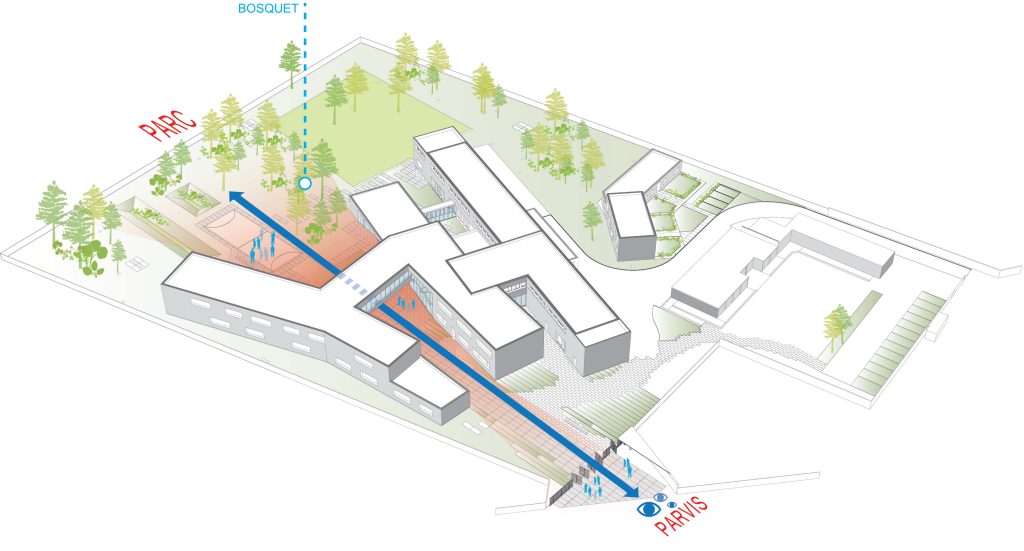
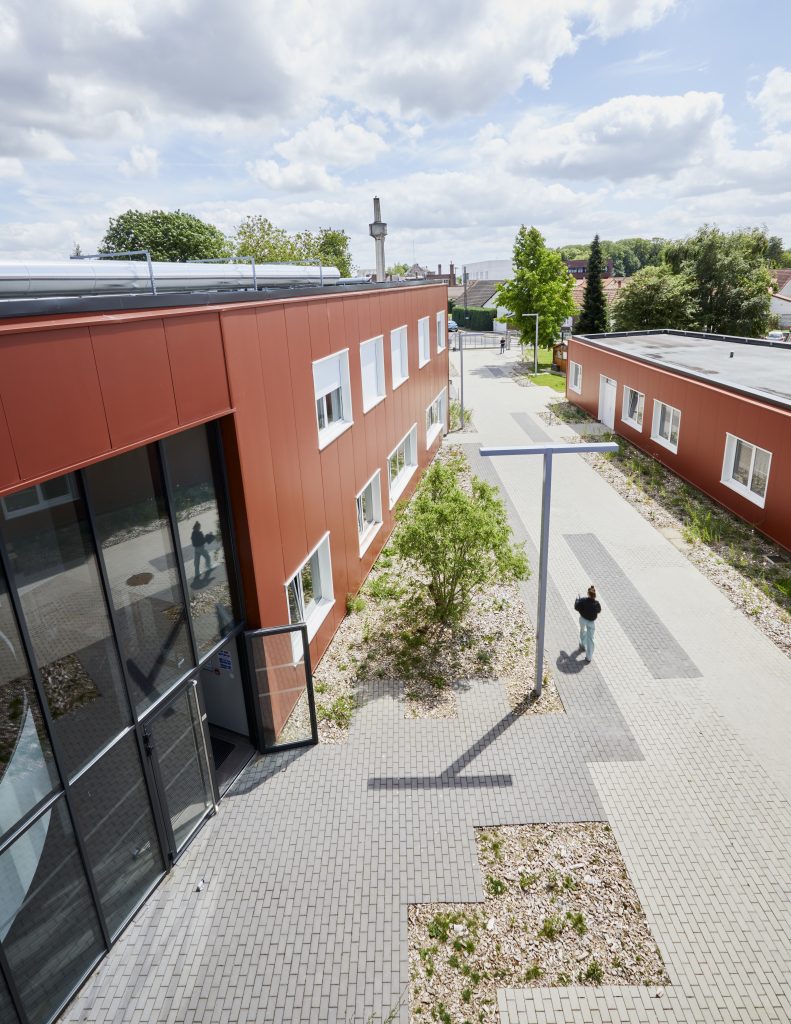
The composition is organized along a central axis that connects the various functions and spaces of the school. This central area contrasts with the rest of the highly vegetated site and relates closely to the built structures. It channels and collects all pedestrian flows, serving as a spatial landmark. As an open, mineral space, it allows users to easily understand the site’s organization and the relationships between different buildings.
THE COURTYARD
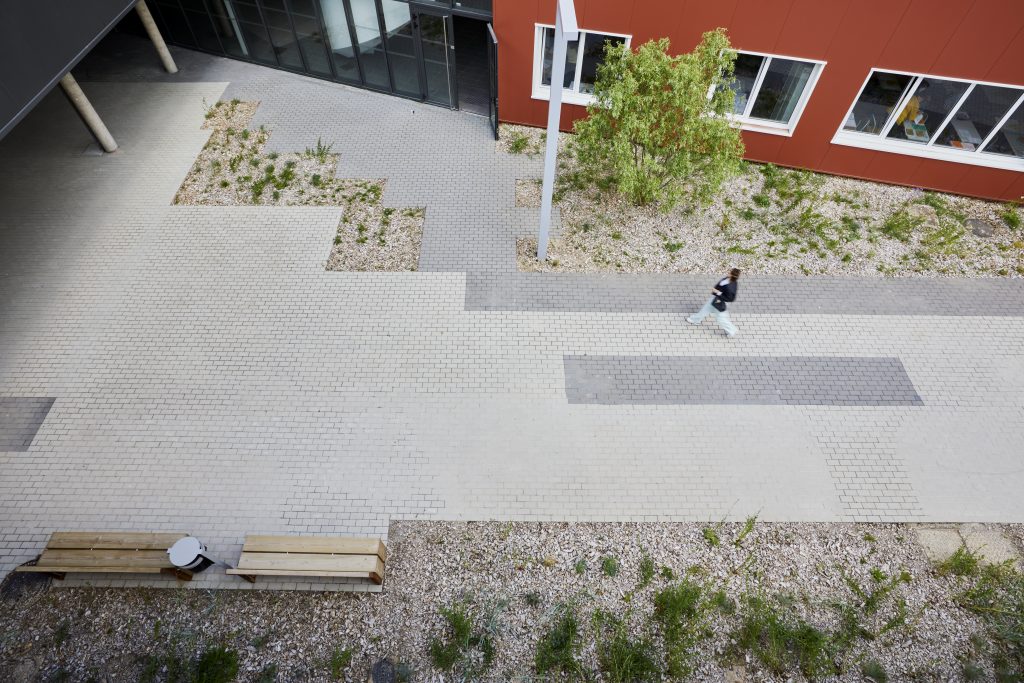
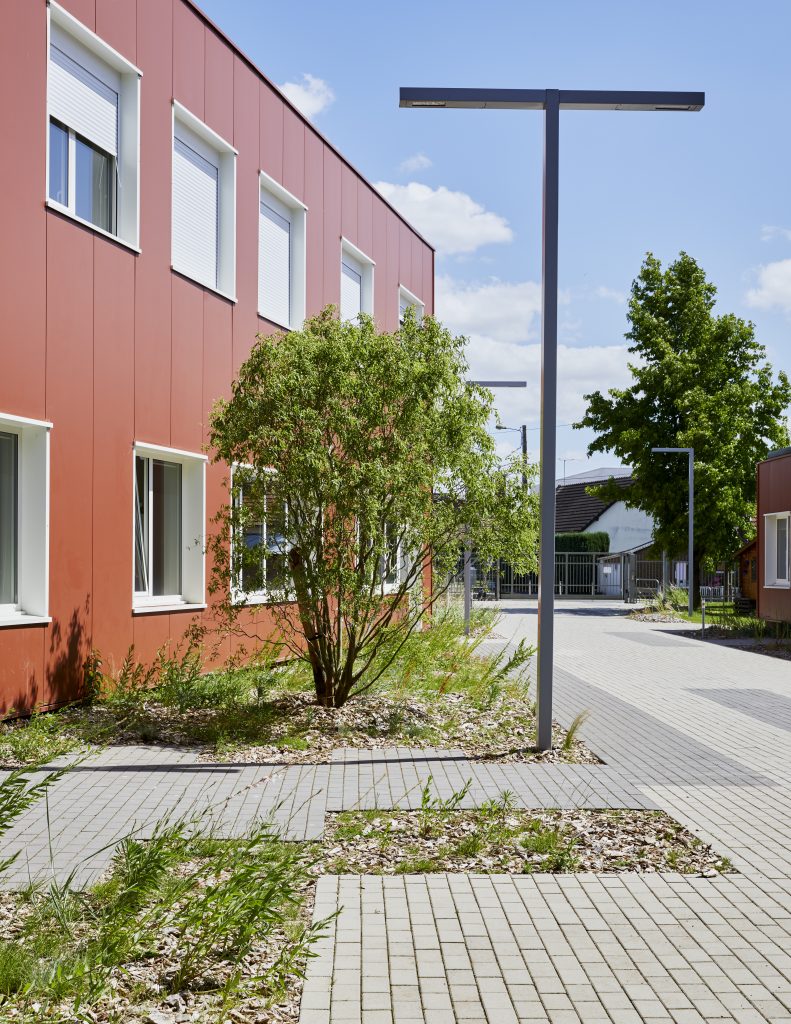
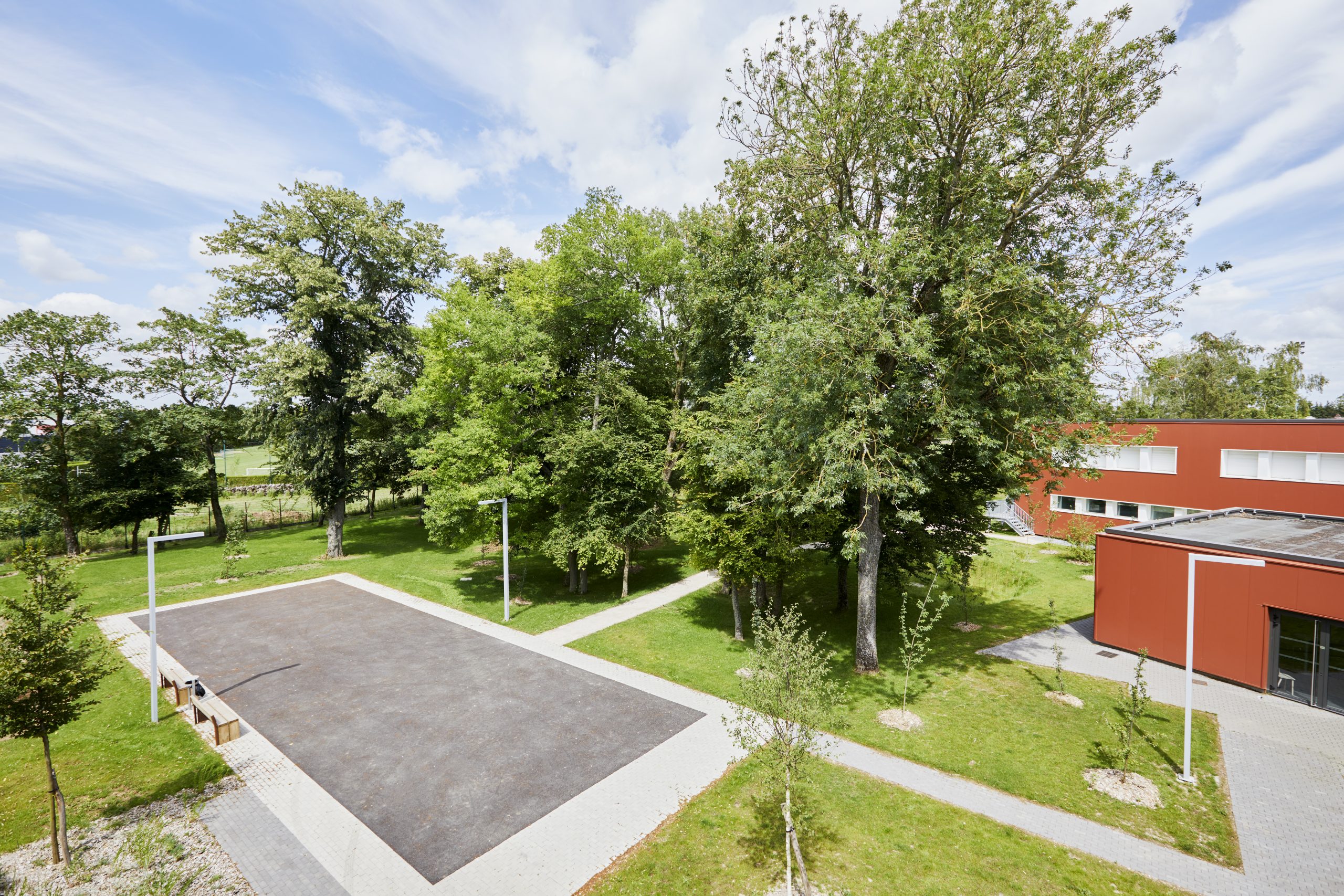
The new courtyard is located at the end of the main axis, where all paths converge. This space provides areas for rest and relaxation for students, as well as secluded spots for a sense of protection. The courtyard is a cocoon where varied atmospheres intertwine, creating a comfortable environment for students. Particular attention was paid to using sunny areas to create vibrant living spaces.
VEGETATION
The trees already present before our intervention form a perfect wooded edge around the entire site, creating a cocoon of greenery. Tall in stature, their canopies reach over 10 meters. We complemented the existing undergrowth with additional vegetation layers: small trees, shrubs, and groundcover plants. In doing so, we enhance habitats for wildlife and promote the development of local flora.